Delayed but Not Denied Wavy Svg Designs Review
As a designer who spends more time staring at stitch charts than sleeping, I approach every new digital asset with a healthy dose of skepticism. The market is flooded with generic clip art, so finding something that actually translates well from screen to fabric requires careful scrutiny. That is exactly why I decided to put Delayed but Not Denied Wavy Svg Designs through its paces. This isn't just about how the vector looks on a monitor; it is about how it behaves under the needle, how it holds up in a real-world embroidery project, and whether it has the commercial viability needed for a serious craft business or personal gift.
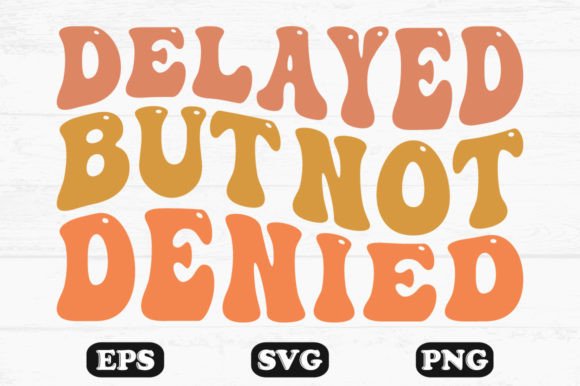
The phrase "Delayed but Not Denied" carries a specific energy. It speaks to resilience, patience, and eventual success. When paired with a retro wavy aesthetic, it creates a mood that is both nostalgic and modern. My first impression of this design was its strong visual personality. The typography is bold, yet the wavy distortion adds a layer of playfulness that prevents it from feeling too rigid. For an embroidery file, this balance is crucial. If the text were too thin or intricate, it would become illegible after stitching. Here, the thick, flowing lines suggest a design that can handle fill stitches beautifully while maintaining readability.
Real-World Application: From Screen to Stitch
I often test designs by imagining them on specific products before I even open my digitizing software. For Delayed but Not Denied Wavy Svg Designs, my immediate thought was a custom embroidered tote bag for a creative entrepreneur. The vintage vibe fits perfectly with the canvas texture of a high-quality tote. Alternatively, I see this working exceptionally well as a sweatshirt embroidery piece for a small batch run aimed at college students or young professionals who appreciate motivational, retro-inspired messaging.
When evaluating a machine embroidery design, we have to consider the end user. Who is buying this? If you are an Etsy seller or running a small shop product line, you need items that feel premium. A poorly executed wavy text design can look cheap, especially if the thread tension is off or the density is inconsistent. However, the structure of this particular design suggests it is built for clarity. The curves are smooth, which means fewer stops and starts for the machine, resulting in a cleaner finish. This is vital for customer trust; buyers expect their handmade products to look professional, not like a beginner’s practice hoop.
I also considered using this for personalized gifts. Imagine a baby embroidery project on a muslin blanket or a onesie. While the message might be slightly mature for a newborn, it could work wonderfully for a toddler’s room decor or a nursery pillow cover where the parents appreciate the sentiment. The versatility of the Graphics allows it to sit comfortably in various categories, from Crafts to apparel decoration, making it a valuable asset for digital product sellers looking to diversify their offerings.
Technical Performance and Visual Appeal
One of the biggest challenges with wavy typography in embroidery is maintaining the integrity of the letters. Thin serifs or sharp angles can get lost in the fabric or cause puckering. With Delayed but Not Denied Wavy Svg Designs, the letterforms appear robust enough to withstand standard stitch density. This means you are less likely to encounter issues with thread breaks or fabric distortion, provided you use the correct stabilizer.
For best results, I recommend pairing this design with a solid color background. The retro wavy style benefits from contrast. On dark fabric, using light metallic threads could elevate the finished product into a boutique-level item. On light fabrics, deep navy or black threads would make the wavy text pop. It is essential to check thread colors against your fabric choice to ensure the message remains legible. A quick trick I use is to view the design in black and white mockups; if the shape reads clearly without color, it will likely stitch out successfully.
The design also lends itself well to satin stitch outlines if you want to add definition, though the fill stitch alone should carry the weight of the image. If you are creating an embroidered patch, the wavy edges provide a natural border that doesn’t require excessive trimming. This makes it efficient for production runs where time is money. For commercial embroidery projects, efficiency matters just as much as aesthetics. A design that stitches cleanly and quickly allows you to maintain profitability without sacrificing quality.
Where to Exercise Caution
No design is perfect for every situation, and being honest about limitations is part of responsible reviewing. There are certain scenarios where Delayed but Not Denied Wavy Svg Designs might struggle. First, avoid using this on textured fabrics like heavy tweed or boucle. The irregular surface can hide the subtle curves of the wavy text, making the design look muddy. Similarly, thin or stretchy fabrics require extra care. Without proper stabilization, the tension of the stitches can distort the fabric, warping the intended shape of the waves.
Small hoop sizes are another potential pitfall. If you attempt to digitize this for a very small area, such as a logo on a cap or a tiny accent on a pair of socks, the details may become indistinguishable. The wavy nature of the text relies on space to breathe. Compressing it too much will result in overlapping threads and a loss of visual impact. Additionally, while the design is generally straightforward, always inspect the corners and curves closely in your digitizing software. Ensure there are no unnecessary nodes that could cause the machine to hesitate or create visible jump stitches.
Curved surfaces, like the front panel of a baseball cap, also present challenges. While possible, achieving a flat, crisp look on a curved surface requires advanced hooping techniques. If you are a hobbyist or maker new to curved hooping, stick to flat projects like aprons, kitchen towels, or pillow covers until you are comfortable with the mechanics of your machine.
Practical Designer Notes for Success
- Test on Scrap Fabric: Always run a test stitch on the same type of fabric and stabilizer you plan to use for the final product. This reveals tension issues and color clashes before you commit to the final piece.
- Check Stabilizer Choice: A stable base is non-negotiable for wavy designs. Use a cut-away stabilizer for knit fabrics like t-shirts and sweatshirts to prevent stretching over time. For woven fabrics, a tear-away might suffice, but a wash-away offers the cleanest finish.
- Review Stitch Density: Ensure the design is not overly dense. Too many stitches per square inch can make the fabric stiff and uncomfortable, especially for wearable items like custom apparel.
- Confirm Licensing: Before selling finished items or using this as design assets in a larger collection, verify the license terms. Some files are for personal use only, while others allow commercial sales. Clarity here protects your craft business from legal issues.
- Mockup for Marketing: Create printable mockups to visualize the design on different products. This helps you determine if the design appeals to your target audience, whether they are buyers of holiday embroidery gifts or seekers of unique personalized products.
In conclusion, Delayed but Not Denied Wavy Svg Designs is a strong contender for designers looking to add a touch of retro flair to their embroidery repertoire. Its clear shapes, motivational theme, and versatile layout make it suitable for a wide range of applications, from tote bag design to sweatshirt embroidery. By paying attention to fabric choice, stabilization, and testing, you can transform this digital file into a stunning handmade product that resonates with customers. Whether you are a seasoned pro or a passionate hobbyist, this design offers the kind of practical value that elevates any embroidery project.