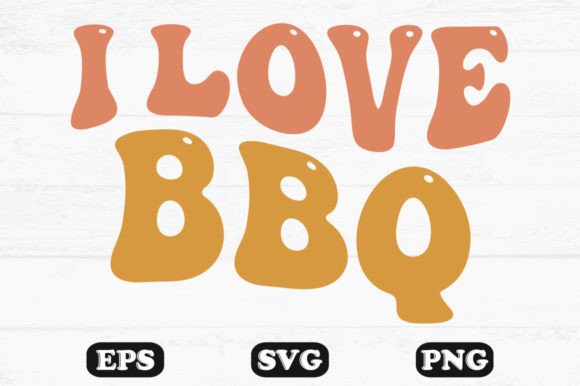
I Love BBQ Retro Wavy T-shirt
When I sit down to review a new design asset, my first question is never just about aesthetics. It is about viability. Can this design survive the transition from a digital preview to a physical, stitched reality? Will it hold up on a customer’s chest after five washes? Does it convey the right mood for the intended audience? Today, I am putting I Love BBQ Retro Wavy T-shirt through that same rigorous filter. This isn’t just another trendy graphic; it is a specific type of typography-driven piece that demands careful handling if you want your finished product to look professional rather than amateur.
The First Impression: Mood and Visual Personality
The moment you load the file, the retro wavy aesthetic jumps out at you. It taps into that nostalgic 70s and 80s vibe that has been dominating craft trends for a while now. The text "I Love BBQ" is rendered in a fluid, distorted font that mimics heat waves or melting ice cream. For an embroidery designer, this immediately raises a flag: distortion is difficult to stitch cleanly. Unlike a standard block lettering font where every character sits neatly in its own box, these wavy lines require the digitizer (or the machine) to navigate curves that can easily bunch up or lose definition.
The mood is casual, fun, and slightly chaotic in a controlled way. It screams summer cookouts, backyard gatherings, and relaxed weekends. It feels perfect for a handmade gift for a grill master or a boutique item for a local food festival. However, the visual personality is also quite bold. It does not whisper; it shouts. This means it works best as a central focal point, not as a subtle accent. If you are looking for something delicate or minimalist, this design will overpower the garment. But for a statement piece on a heavy cotton tee or a sturdy canvas tote, the energy is exactly what you want.
Real-World Application: Where This Design Shines
In my experience working with small business owners and Etsy sellers, context is everything. I Love BBQ Retro Wavy T-shirt finds its natural home in projects that embrace a rugged, lived-in charm. Let’s look at a few scenarios where this design would truly excel.
First, consider custom apparel. A vintage-wash black t-shirt is the obvious choice, but don’t overlook heavyweight sweatshirts for early autumn markets. The contrast between the thick fabric and the wavy threads creates a tactile experience that customers love. When you stitch this onto a sweatshirt, the slight stretch of the fabric actually complements the wavy nature of the text, making it feel integrated rather than pasted on. It becomes part of the garment’s texture.
Second, think about kitchen and home goods. An embroidered apron is a classic gift item, and placing this design on the bib area adds a touch of humor and personality. Similarly, tea towels made of textured linen or flour sack cotton provide a great backdrop. The roughness of the fabric helps break up any overly sharp edges in the stitching, softening the overall look. It turns a simple kitchen towel into a keepsake.
Third, there is the potential for branded merchandise. If you run a small shop selling grilling accessories, this design could serve as a logo patch or a label. Imagine an embroidered patch sewn onto the sleeve of a denim jacket or the corner of a cooler bag. In these applications, the design acts as a badge of identity. It signals to the buyer that this product was made by someone who understands the culture of barbecue. That connection builds trust and encourages repeat purchases.
Stitch Density and Fabric Texture Considerations
One of the most critical aspects of evaluating this design is how it interacts with different materials. Embroidery is not just ink on paper; it is thread on cloth. The wavy lines likely rely on a combination of satin stitches for the outlines and fill stitches for the body of the letters. If the stitch density is too high, the fabric might pucker, especially on lightweight tees. If it is too low, the underlying material might show through, ruining the clean look of the retro wave.
This is why testing on scrap fabric is non-negotiable. You need to see how the thread colors interact with the base fabric. On dark fabrics, you might need a heavier underlay or a contrasting thread color to make the white or light-colored text pop. On light fabrics, the shadow cast by the raised stitches can add depth, giving the wavy effect a three-dimensional quality that looks stunning in person. Always check your thread colors against the fabric before committing to a full production run.
Pitfalls to Avoid: Where Caution is Required
While this design has strong potential, it is not without its challenges. There are several situations where I Love BBQ Retro Wavy T-shirt might fail to deliver the desired result.
Avoid using this design on curved surfaces like baseball caps unless you have specialized software and a curved hoop. The distortion of the text will become exaggerated and potentially unreadable when wrapped around the front panel of a hat. The perspective shifts can turn a cool wavy line into a messy blob. Similarly, be cautious with tiny lettering details. If the design includes smaller subtext or decorative elements near the main phrase, ensure they are large enough to be stitched clearly. Tiny running stitches often disappear into the fabric weave, leaving gaps that look like errors rather than intentional design choices.
Another area of concern is thin or stretchy fabrics. Jersey knits and rayon blends can distort under the tension of embroidery. If you try to stitch this design directly onto a thin t-shirt without proper stabilizer support, the entire design might shift or warp. Always use a cut-away stabilizer for stretchy fabrics to provide long-term stability. Without it, the wavy lines might twist over time, especially after washing.
Finally, consider the durability of the finish. Barbecue enthusiasts are active people. They move, they sweat, they handle hot tools. If the design is stitched too loosely, the threads might snag on grill grates or oven mitts. Ensure that the edge stitches are secure and that the design has enough coverage to withstand frequent wear and tear. A poorly executed embroidery job on a BBQ shirt is a quick way to lose a customer’s trust.
Strategic Advice for Crafters and Sellers
If you are planning to sell products featuring this design, presentation matters. Use printable mockups that showcase the design in realistic settings. Show it on a folded tee next to grilling tools, or on a hanging apron in a rustic kitchen. These contextual images help buyers visualize the product in their own lives, increasing conversion rates. However, do not misrepresent the final product. If the design looks significantly different in digital previews versus actual stitching, be transparent about it.
Also, remember to check the licensing terms. Even though this is categorized under Crafts and Graphics, commercial usage rights vary. Some designs allow you to sell unlimited finished items, while others restrict the number of sales or prohibit resale altogether. Before you list your item on Etsy or your own website, confirm that you have the right to sell physical goods made from this digital file. Ignoring this step can lead to costly legal issues down the line.
In conclusion, I Love BBQ Retro Wavy T-shirt is a versatile and engaging design asset that offers great potential for handmade products. It captures a popular aesthetic and lends itself well to various embroidery projects, from apparel to home decor. By paying attention to stitch density, fabric choice, and proper stabilization, you can transform this digital file into a high-quality finished product that customers will cherish. Just remember to test thoroughly, plan carefully, and always prioritize the practical realities of embroidery over the perfection of the screen.